Non-Surgical Spinal Decompression in Singapore
Non-Surgical Spinal Decompression in Singapore
What Is Non-Surgical Spinal Decompression?
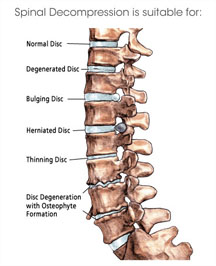
Non-surgical spinal decompression is a gentle, motorised therapy that applies precise, controlled traction to the spine to create negative pressure inside the intervertebral discs. This negative pressure draws the disc inward, reduces mechanical load on compressed nerves, and improves the flow of fluid, oxygen and nutrients into the disc — without injections, anaesthesia or surgery.
At ScolioLife, decompression is not a single machine. It is a three-part system that applies the same principle — relieving pressure on discs and nerves — in three complementary ways: a static motorised decompression table for precise passive treatment, the ambulatory Vertetrac system for active decompression while you move, and the take-home ScolioEase™ traction belt to maintain progress between visits.
How Spinal Decompression Works
The spine carries continuous compressive load from gravity, posture and movement. Over time this load can flatten discs, narrow the space where spinal nerves exit, and trap a bulging or herniated disc against a nerve root. Decompression reverses that load.
When a measured distraction force is applied along the spine, pressure inside the targeted disc drops below zero. In a landmark study published in the Journal of Neurosurgery (Ramos & Martin, 1994), vertebral axial decompression lowered intradiscal pressure to as low as −160 mmHg — a strong negative pressure that helps retract herniated disc material and pull water and nutrients back into the disc. Conventional sitting or standing, by comparison, keeps lumbar discs under positive pressure.
Three Modes of Decompression Under One Roof
Most clinics offer one decompression device. ScolioLife layers three so that pressure relief continues across rest, movement and daily life — the difference between an isolated session and a continuous correction programme.
 1. Static motorised decompression table — you lie down while a computer-controlled system applies a precise, repeatable pull. Ideal for targeting a specific lumbar or cervical disc with maximum negative pressure.
- 2. Vertetrac dynamic ambulatory traction — a wearable frame that decompresses the spine while you walk, so discs are unloaded during natural movement and muscles stay active rather than passive.
- 3. ScolioEase™ take-home traction belt — a self-applied belt that delivers gentle daily distraction at home, helping maintain the relief gained in clinic between appointments.
| Decompression Table | Vertetrac Traction | ScolioEase™ Belt | |
|---|---|---|---|
| Setting | In-clinic | In-clinic | At home |
| Body position | Lying down, passive | Upright, walking and active | Worn during daily activity |
| How it acts | Computer-controlled axial pull creating strong negative intradiscal pressure | Dynamic 3-D traction applied during natural movement | Sustained gentle distraction |
| Best suited to | Acute disc and nerve compression | Pairing decompression with active rehabilitation | Maintaining gains between visits |
| Role in your programme | Foundation | Functional loading | Continuity |
What the Evidence Shows
Clinical research supports decompression as a measurable, non-surgical option for disc-related pain. In a randomised controlled trial published in the International Journal of Clinical Practice (Choi et al., 2022), patients with subacute lumbar herniated discs who received non-surgical decompression showed a 27.6% average reduction in herniated disc volume, compared with just 7.1% in the group that did not receive decompression. Around 27% of the decompression group achieved more than a 50% reduction in herniation, versus none in the control group, alongside significantly lower leg-pain and disability scores at two and three months.
These findings reflect a clinical goal rather than a promise. Outcomes depend on the specific diagnosis, disc condition and how consistently the programme is followed, and individual results vary.
Conditions Decompression Can Support
- Herniated and bulging discs — helps retract disc material away from compressed nerves.
- Sciatica and pinched nerves — eases pressure on nerve roots that radiate pain into the legs or arms.
- Degenerative disc disease — improves disc hydration and movement in worn, dehydrated discs.
- Facet joint and posture-related back or neck pain — reduces compressive load on overloaded spinal segments.
- Scoliosis-related disc loading — used as an adjunct within a wider scoliosis correction programme to offload asymmetrically compressed discs.
Who It Suits — And Who It Does Not
Decompression is suitable for most adults with disc or nerve-related back and neck pain who want to avoid surgery. It is generally not advised for people with spinal fractures, advanced osteoporosis, spinal tumours or infection, abdominal aortic aneurysm, or for those who are pregnant, or who have had spinal fusion with instrumentation. Every patient is screened first, and decompression is only recommended after Dr Kevin Lau and the clinical team review your history and imaging.
What to Expect at ScolioLife
- 1. Consultation and assessment with Dr Kevin Lau — your history, symptoms and any X-rays or MRI scans are reviewed.
- 2. 3D postural and spinal evaluation — measurable, repeatable baseline of your spine.
- 3. A tailored decompression plan — the right mix of table, Vertetrac and ScolioEase for your case.
- 4. Comfortable, pain-free sessions — you stay fully clothed and most patients find the gentle stretch relaxing.
- 5. Integration with exercise and nutrition — decompression is combined with scoliosis-specific exercise and nutritional support to address the root causes of spinal imbalance.
Why ScolioLife
ScolioLife is led by Dr Kevin Lau, a pioneer in non-surgical spine correction with more than 20 years of clinical experience and published books on scoliosis. Rather than relying on a single device, ScolioLife integrates decompression with custom 3D bracing, targeted exercise, specialised equipment and nutritional therapy — a holistic programme designed to support the spine, not just relieve symptoms for a day. Patients are seen at our clinics in Singapore, Kuala Lumpur and Surabaya.
Why Patients Choose ScolioLife®
 A third path beyond “wait and see” or surgery — the ScolioLife® Method pairs the ScolioAlign® over-corrective brace with scoliosis-specific 3D exercise rehabilitation in one integrated programme.
- Published outcome data — review our 86% success rate and exactly how it is measured. Individual results vary with age, curve type and compliance.
- One doctor-led methodology, three clinics — Singapore (Orchard Road), Kuala Lumpur and Surabaya, all led by Dr Kevin Lau, D.C., M.H.N., with 25+ years focused on non-surgical scoliosis care.
Frequently Asked Questions
Is non-surgical spinal decompression painful?
No. Decompression applies a slow, controlled stretch and most patients describe it as a gentle, relieving pull. You remain fully clothed and many people relax or even fall asleep during a session. If you feel any discomfort, the force can be adjusted immediately.
How is this different from ordinary traction?
Ordinary traction simply pulls the spine. ScolioLife's decompression uses a computer-controlled table that varies the force to create negative pressure inside a specific disc, plus the ambulatory Vertetrac that decompresses while you move and the ScolioEase belt for home use. It is decompression applied across rest, movement and daily life rather than one static pull.
How many sessions will I need?
It depends on your diagnosis and how your spine responds. Disc and nerve conditions are typically supported over a course of sessions rather than a single visit, and Dr Kevin Lau will outline a personalised plan after your assessment. Individual results vary.
Can spinal decompression help me avoid surgery?
For many people with disc or nerve-related pain, non-surgical decompression offers a conservative option to explore before considering surgery. Research shows it can reduce herniated disc volume and ease leg pain. It is not suitable for every case, which is why ScolioLife screens each patient with history and imaging first.
Is decompression safe for scoliosis patients?
Used appropriately, decompression can offload discs that are unevenly compressed by a scoliotic curve. For scoliosis it is used as one adjunct within a broader correction programme that includes bracing and exercise, not as a stand-alone fix. The plan is always tailored to the individual spine.
Take the First Step
If you are living with back pain, neck pain, sciatica or a disc problem and want a non-surgical path forward, ScolioLife can help you understand your options. Book a consultation with Dr Kevin Lau for a full spinal assessment and a personalised decompression plan, or send us your X-ray or MRI for a digital review. Use the Book Consultation button at the top of this page, or visit our Contact Us page to reach the Singapore clinic by phone, email or WhatsApp.