Pectus Excavatum Correction in Singapore
Non-Surgical Pectus Excavatum Care in Singapore
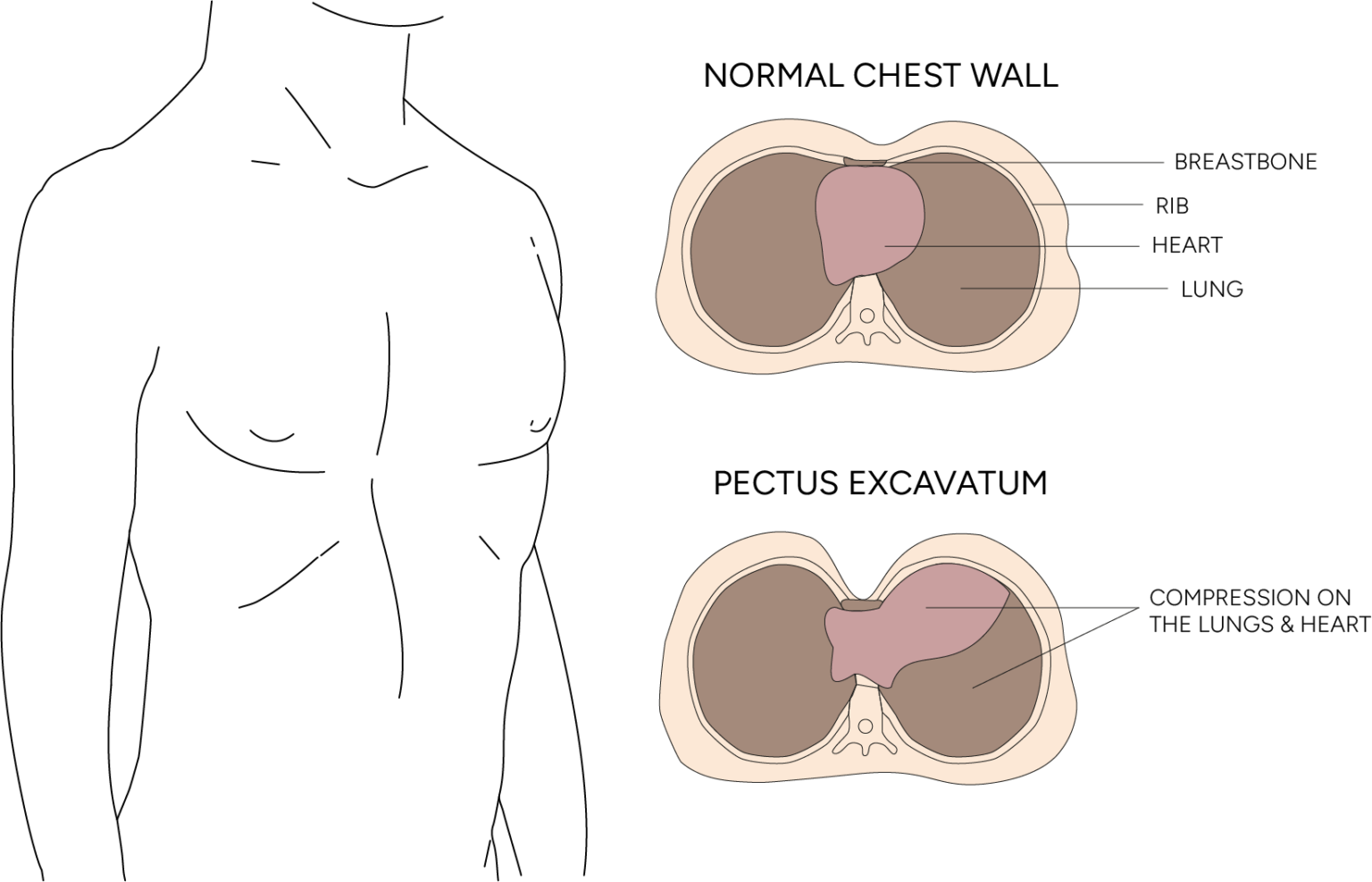
Pectus excavatum is the most common congenital chest wall deformity, in which the breastbone and surrounding cartilage grow inward to create a hollow, sunken appearance in the centre of the chest. It is estimated to affect around 1 in 300 to 400 people and is roughly three to five times more common in boys than girls. It may be visible from birth or become more pronounced during the adolescent growth spurt. At ScolioLife, we offer a structured, non-surgical programme built around vacuum bell therapy, targeted exercises and posture training to improve the appearance and function of the chest wall without incisions or anaesthesia.
Signs and Symptoms of Pectus Excavatum
For many people the main concern is cosmetic, but deeper defects can compress the heart and lungs and affect day-to-day function. Common features include:
 Visible sunken chest — a central depression in the breastbone that may be symmetric or deeper on one side.
- Reduced exercise tolerance — breathlessness or fatigue during sport, as a deep cavity can limit chest expansion.
- Chest discomfort or palpitations — in more severe cases the sternum can press against the heart and lungs.
- Psychological impact — self-consciousness, social anxiety and avoidance of swimming or activities that expose the chest, especially in teenagers.
What Is Vacuum Bell Therapy?
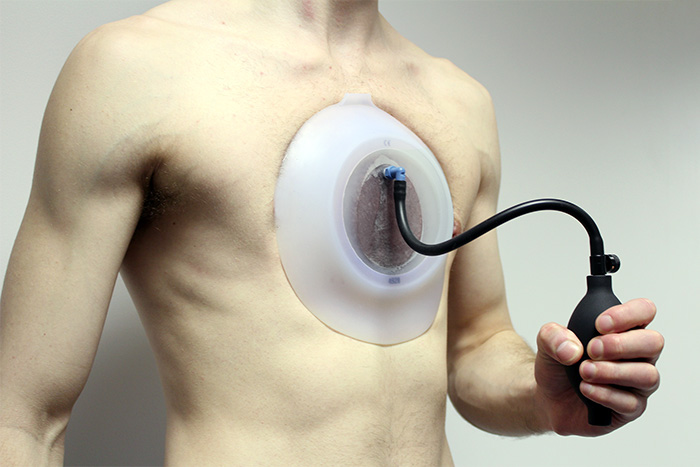
Vacuum bell therapy is a non-surgical method that places a suction cup over the sunken sternum and uses a hand pump to create negative pressure, gradually drawing the chest wall outward. It works by taking advantage of the natural flexibility of a young, growing chest wall, lifting the breastbone a little further over months of consistent daily use. The device was developed in 2005 by German engineer Eckart Klobe, who used the concept on his own pectus excavatum before it was studied clinically.
Why Patients Consider Vacuum Bell Therapy
- Non-invasive — no incisions, no metal bars and no general anaesthesia, which removes the surgical risks of bleeding, infection and bar displacement.
- Home-based and flexible — the device is used at home, fitting around school, work and sport rather than requiring a hospital stay.
- Generally well tolerated — most users report only mild, short-lived effects such as temporary redness or a tight sensation.
- Evidence-supported in the right candidates — prospective studies by Haecker and colleagues report the greatest improvement in younger patients with flexible, mild and symmetric chest walls who comply over two to three years.
Surgical vs Non-Surgical Options Compared
Pectus excavatum is managed along a spectrum from a daily home device through to major reconstructive surgery. The right option depends on the depth of the defect, the patient's age and chest-wall flexibility, and whether the heart or lungs are affected.
| Vacuum Bell Therapy | Nuss Procedure | Ravitch Procedure | |
|---|---|---|---|
| Approach | Suction device worn at home | Curved steel bar placed under the sternum through small side incisions | Open surgery removing deformed cartilage and repositioning the sternum |
| Invasiveness | Non-invasive, no surgery | Minimally invasive surgery | Major open surgery |
| Anaesthesia | None | General anaesthesia | General anaesthesia |
| Recovery | No downtime; used over months to years | Hospital stay; bar kept in place around 2–3 years | Longer recovery; struts removed after 6–12 months |
| Best suited to | Younger patients with flexible, mild to moderate, symmetric defects | Moderate to severe defects in growing patients | Severe or asymmetrical defects |
| Key consideration | Requires daily commitment; results depend on age and consistency | Effective but carries surgical risk and a second operation to remove the bar | Effective for complex cases but the most invasive option |
Who Is a Good Candidate for Vacuum Bell Therapy?
The best results are seen in younger patients — usually under 10 to 12 years old — who have a flexible chest wall, a mild to moderate and symmetric defect, and who use the device consistently each day. Flexibility of the chest is the single most important factor, which is why starting earlier tends to give better outcomes. Older teenagers and adults can still benefit, but the chest wall is stiffer and improvement is usually more gradual. A clinical assessment is the only reliable way to know whether you or your child is a suitable candidate.
The ScolioLife Approach
ScolioLife is among the first clinics in the region to offer structured vacuum bell programmes for pectus excavatum, led by Dr Kevin Lau, who brings more than 20 years of experience in non-surgical spine and posture care and is a published author in the field. Rather than relying on the device alone, we combine it with the same postural and breathing methods used in our scoliosis work to support the chest wall as a whole.
- Personalised assessment — each patient's defect depth, flexibility and goals are reviewed before a programme is set, so the plan fits the individual.
- Combined, multi-modal programme — vacuum bell therapy is paired with targeted exercises, breathing work and posture training to optimise the result.
- Progress monitoring — measurements and photographs at follow-up visits track change and guide adjustments to the vacuum pressure and routine.
- Led by Dr Kevin Lau — care is delivered under an experienced, evidence-based clinician focused on safe, non-surgical options. Individual results vary.
Why Patients Choose ScolioLife®
- A third path beyond “wait and see” or surgery — the ScolioLife® Method pairs the ScolioAlign® over-corrective brace with scoliosis-specific 3D exercise rehabilitation in one integrated programme.
- Published outcome data — review our 86% success rate and exactly how it is measured. Individual results vary with age, curve type and compliance.
- One doctor-led methodology, three clinics — Singapore (Orchard Road), Kuala Lumpur and Surabaya, all led by Dr Kevin Lau, D.C., M.H.N., with 25+ years focused on non-surgical scoliosis care.
Frequently Asked Questions
Can pectus excavatum be improved without surgery?
Yes. In suitable candidates — particularly younger patients with flexible, mild to moderate, symmetric defects — vacuum bell therapy combined with exercises and posture training can improve the appearance of the chest without surgery. Deeper or rigid defects, and cases affecting the heart or lungs, may still need a surgical opinion. Individual results vary.
Does vacuum bell therapy actually work?
Published research shows vacuum bell therapy can lift the sunken chest wall, with the best and most lasting results in children and young teenagers who have a flexible chest and use the device consistently for two to three years. Compliance and starting age are the strongest predictors of success.
How many hours a day do I need to wear the vacuum bell?
Most programmes build up to several hours of use per day, often split into sessions, continued over one to two years or more. Your exact schedule depends on the depth of the defect, your age and how your chest responds, and is adjusted at follow-up visits.
Is vacuum bell therapy painful?
It is generally not painful. The most common effects are mild and temporary, such as redness of the skin, a feeling of tightness or minor swelling where the cup sits. These usually settle quickly, and the pressure can be adjusted for comfort.
What age is best to start vacuum bell therapy?
Earlier is generally better. The chest wall is most flexible in children and young teenagers, so starting before or during the growth spurt — often under 10 to 12 years old — tends to give the best response. Older patients can still benefit, but improvement is usually slower.
Can adults use a vacuum bell for pectus excavatum?
Adults can use a vacuum bell, but the chest wall stiffens with age, so changes tend to be more modest and take longer than in children. A clinical assessment will help set realistic expectations before starting.
Is vacuum bell therapy for pectus excavatum available in Singapore?
Yes. ScolioLife offers structured, supervised vacuum bell programmes at our clinic at Tong Building, 302 Orchard Road, Singapore, combined with exercises and posture training and monitored by Dr Kevin Lau and our team.