Non-Surgical Scoliosis Correction
Our Specialised Correction Methods
 Medically reviewed by Dr. Kevin Lau, D.C., M.H.N. · Doctor of Chiropractic, non-surgical scoliosis specialist · Last reviewed: June 2026
We combine scientifically proven techniques into a comprehensive care plan designed specifically for your spine’s unique needs.
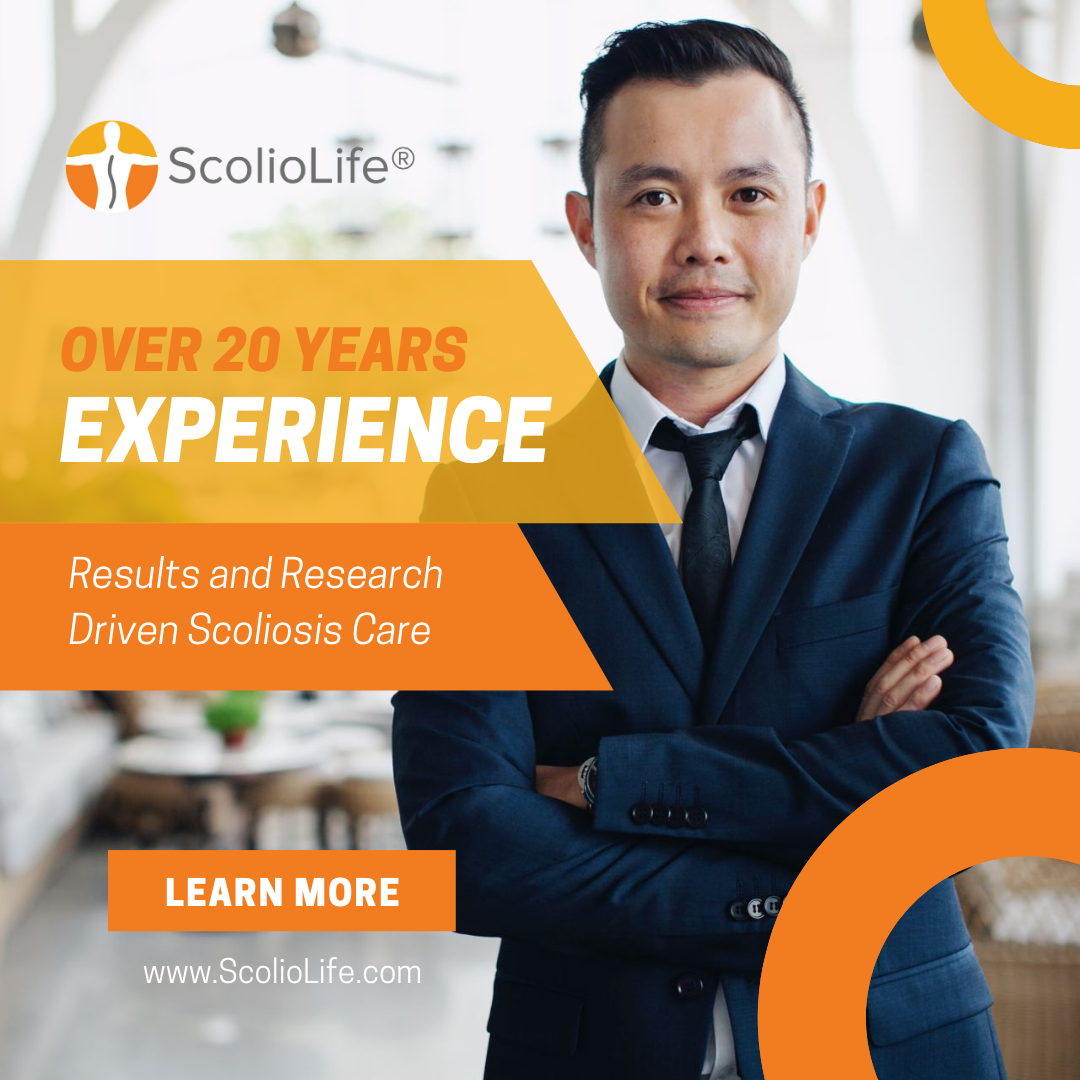
A Journey of Passion & Clinical Excellence
Dr Kevin Lau’s commitment to scoliosis correction is personal, having watched his own family struggle with the condition. He has spent over two decades developing a multi-model approach that avoids the trauma of surgery.
As Featured on Prime-Time TV
Watch Dr Kevin Lau explain the ScolioLife approach to non-surgical scoliosis correction.
Two Programs — Choose Your Path
Whether you live in Singapore or are flying in from overseas, the clinical protocol is the same — only the schedule changes.
Proven Results You Can See
Significant spinal correction achieved through our non-surgical methods. Our clinic tracks Cobb angle reductions and postural improvements across thousands of patients.
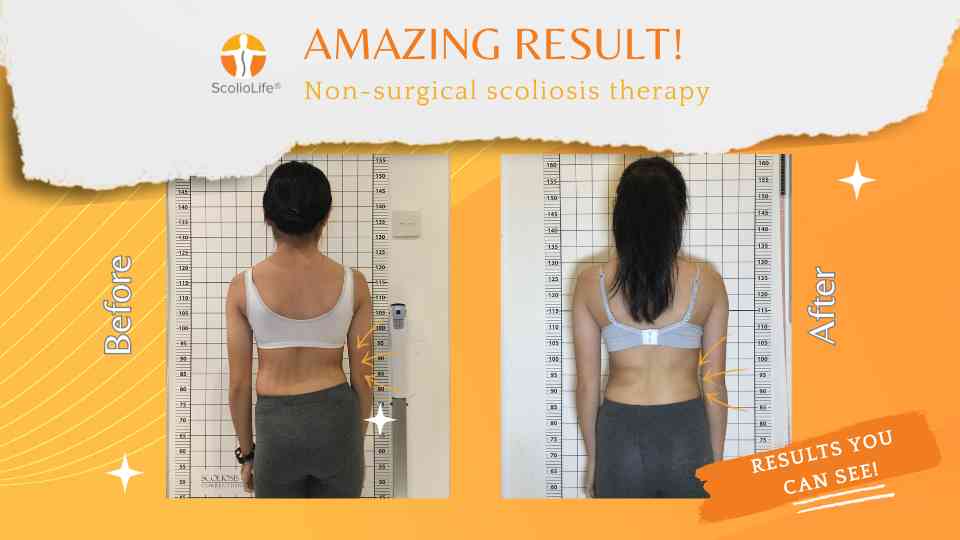
Before the treatment, my worst curve was 42 degrees, but now it’s about 25 degrees… just looking at me, you probably can’t tell that I have scoliosis. I’m very grateful, and I would definitely recommend it to fellow scoliosis patients.
How the ScolioLife® Method Works
Frequently Asked Questions
Can scoliosis be reduced without surgery?
Yes. For many adolescent and adult curves under roughly 50 degrees, a structured non-surgical programme of 3D bracing and scoliosis-specific exercise can reduce the Cobb angle and avoid spinal fusion. ScolioLife has documented cases such as a reduction from 42 to 25 degrees.
How is the ScolioAlign™ brace different from a Boston brace?
A traditional Boston brace is designed only to stop a curve from worsening. The ScolioAlign™ 3D brace is over-corrective — it views the spine three-dimensionally and actively works to reduce the Cobb angle, not just hold it.
At what Cobb angle should scoliosis correction start?
Earlier is better. Curves are often monitored from around 10 degrees, with active non-surgical correction commonly recommended from 20 to 25 degrees, especially during growth. At ScolioLife, 3 days of intensive correction is recommended for curves under 20 degrees, and 5 days for curves of 20 degrees and above.
Is non-surgical scoliosis therapy suitable for adults?
Yes. While progression is fastest during adolescent growth, adults with pain or slowly progressing curves can benefit from bracing, exercise and postural correction to improve alignment, reduce pain and stabilise the spine.
Do you accept overseas and online patients?
Yes. We regularly support overseas and online patients. Most begin with a complimentary online X-ray review and a video consultation with Dr Kevin Lau, then travel to our Singapore clinic on Orchard Road for assessment, ScolioAlign 3D brace fitting and intensive care, with online progress reviews afterwards.
Scoliosis Guides & Resources
Dr. Kevin Lau is a Doctor of Chiropractic and non-surgical scoliosis specialist with more than 25 years of clinical experience. He is the founder of ScolioLife® and inventor of the ScolioAlign® brace, an international author whose scoliosis books are published in nine languages, a SOSORT and ACA member, and a United Nations ECOSOC representative.
Read full profile →For Patients Travelling from Australia
Australian patients fly direct from Sydney, Melbourne, Brisbane and Perth to Singapore Changi (7–8 hours) for our Overseas Intensive Care programme — an intensive 1–2 week schedule of corrective care, ScolioAlign® 3D bracing and curve-specific exercise training, followed by remote reviews from home. At ScolioLife®, we combine the hyper-corrective ScolioAlign® brace with the ScolioLife® Method of exercises for three-dimensional, non-surgical scoliosis correction. Individual results vary with age, skeletal maturity, curve type and compliance.
 Start with a remote review — send your X-rays for a Zoom teleconsultation with Dr Kevin Lau before booking flights.
- Understand your curve — our Cobb angle guide explains what your measurements mean for bracing and exercise options.
- Plan your visit — book online, email clinic.sg@scoliolife.com or WhatsApp +65 8907 8900 to map out an intensive programme around school or work.
Further reading
- ScolioLife: A Beacon of Hope for Scoliosis Patients
- A Holistic, Non-Surgical Approach to Scoliosis Care
- From CLEAR to AI: How ScolioLife Is Advancing Scoliosis Care in Singapore
- A Critical Analysis of the Conventional Model of Scoliosis Treatment
- Alternative Scoliosis Treatments: Are They Too Good to Be True?
- Can a Chiropractor treat Scoliosis?
- How Reliable Is Online Scoliosis Information? How to Spot Trustworthy Advice
- 5 Facts You NEED to Know About Scoliosis: Exercises, Pain, and Halting Progression
- From France to Singapore: Lena's Journey with Scoliosis
- Non-Surgical vs Surgical Scoliosis Treatment: A Clear Comparison
- The Hueter-Volkmann Law: Understanding the Cause of Scoliosis
- 5 Interesting Facts About Scoliosis You Should Know
- The First Gene Linked to Scoliosis (CHD7): What It Means for Families
- The ScolioLife™ System: Dr. Kevin Lau’s Holistic Approach to Scoliosis Treatment
- The Impact of Scoliosis on Rib Rotation
- Exploring Anterior Vertebral Body Tethering for Idiopathic Scoliosis: How Well Does the Tether Hold Up?
- Vertebral Body Tethering May Not Improve Cobb Angle
- The Risks of Tether Breaks in Scoliosis Treatment: Why Non-Surgical Methods Are Safer and More Effective
- The Risks of Spinal Surgery for Scoliosis: What You Need to Know
- Spinal Fusion for Adult Scoliosis: Understanding Survival Rates and Long-Term Outcomes
- The Unknown Impact of Scoliosis Surgery: Lack of Long-Term Studies Raises Concerns
- Comparative Analysis of Scoliosis Spine Surgery Costs and Rehabilitation Across Selected Countries
- Latest Advances in Scoliosis Surgery
- Bracing and Spinal Surgery Are Ineffective Scoliosis Treatments
- Scoliosis and the Growth Window: Why Skeletal Maturity Decides How Fast a Curve Can Progress
- Avoid These Mistakes When Managing Teen Scoliosis
- 8 Misconceptions About Scoliosis in Kids
- Make Sure Your In-Home Classroom is Safe for Your Spine and Neck
- A Parent's Role in Helping a Child With Scoliosis
- Scoliosis in Children: What Parents Need to Know and Look For
- Adolescent Idiopathic Scoliosis and Emotional Health
- Low BMI and Early Screening for Adolescent Idiopathic Scoliosis
- 11 Subtle Signs of Scoliosis to Watch Out For
- Scoliosis Screenings: 4 Reasons Why Early Detection Matters