ScolioAlign™ 3D Brace
Correct Scoliosis Without Surgery Using the ScolioAlign® 3D Brace
The ScolioAlign™ 3D Brace is a custom, 3D-printed over-corrective scoliosis brace designed by Dr Kevin Lau (Doctor of Chiropractic, RMIT, Australia)*. Unlike a traditional rigid hospital brace — such as the Boston brace — which is built mainly to stop a curve from getting worse, the ScolioAlign™ 3D Brace is engineered with a different clinical goal: to actively guide the spine toward a reduced Cobb angle. It is built from a 3D full-body laser scan and manufactured using CAD/CAM technology, so every brace is shaped to one specific spine. Individual results vary.
If your child has just been diagnosed — or a hospital has already raised spinal fusion surgery — it's natural to feel overwhelmed and unsure what to do next. Bracing does not have to mean simply waiting to see whether a curve gets worse. The pages and video below explain a different, three-dimensional approach, and how to find out whether it suits your case.
What makes the ScolioAlign™ 3D Brace different?
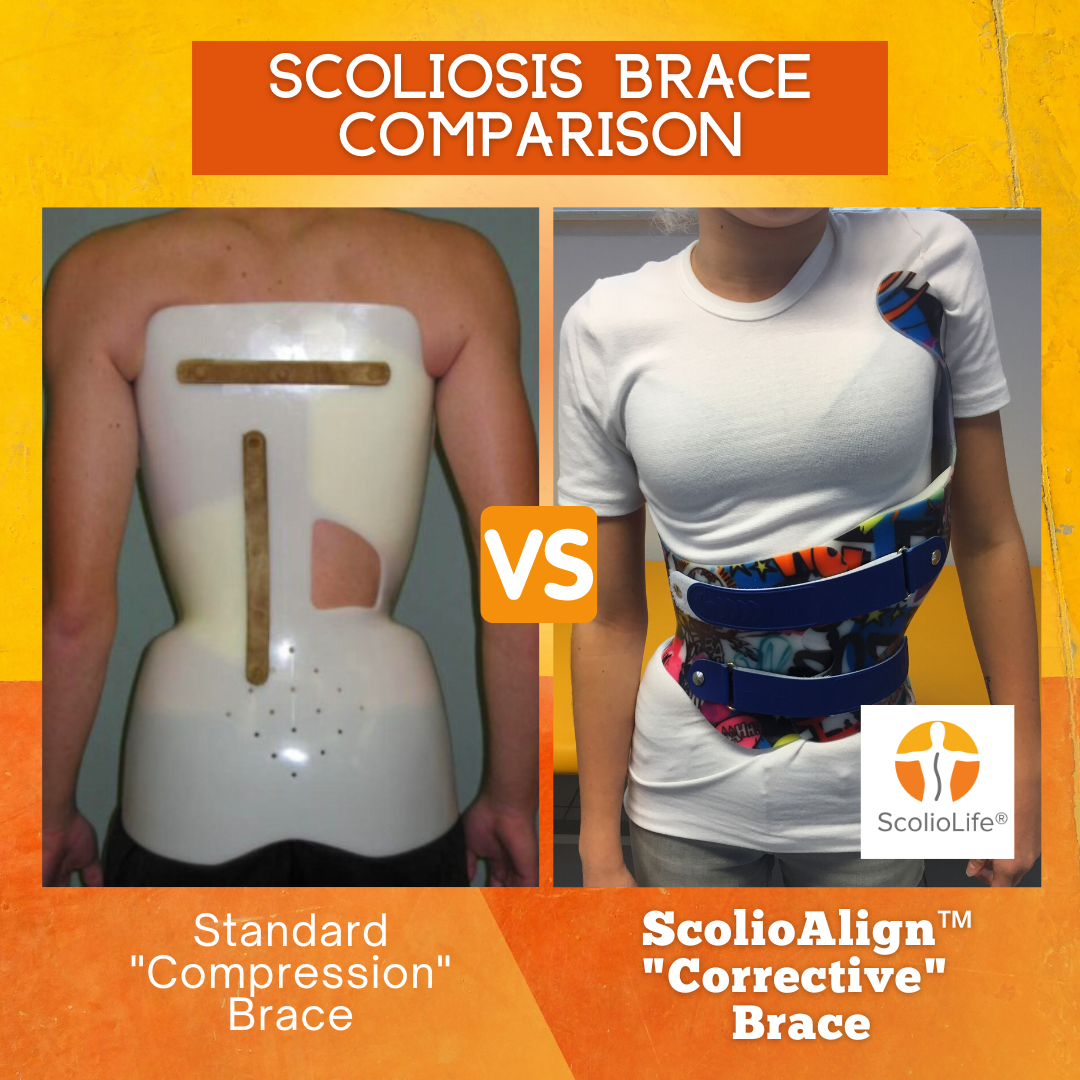
A standard rigid brace compresses the whole trunk and pushes the spine from all sides. Its design intent is to hold a curve in place during growth. The ScolioAlign™ 3D Brace works differently: it is an over-corrective brace that applies guided force at specific points, positioning the body into a posture that mirrors — and slightly over-corrects — the existing curve. The aim is not only to limit progression, but to encourage curve reduction while the brace is worn.
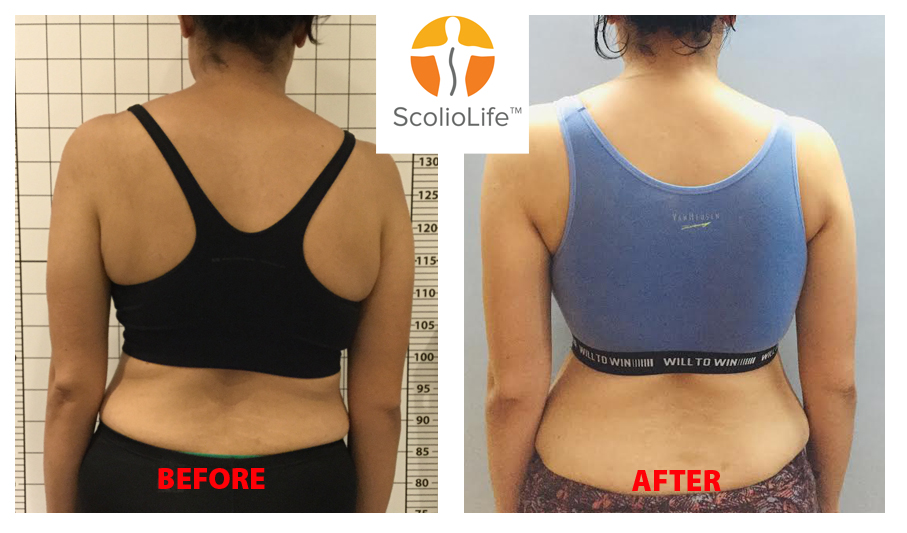

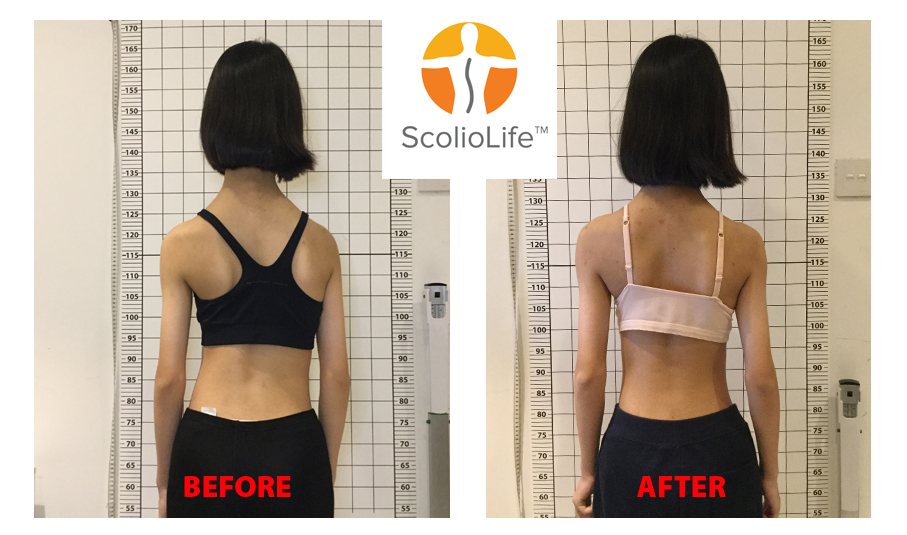
How a 3D over-corrective brace works
-
 It works in 3D, not 2D — scoliosis twists and tilts the spine in three directions at once (rotation, sideways curve and changes in the spine's natural front-to-back curves). The brace is shaped to work on all three, rather than simply flattening the back.
-
It guides, instead of just squeezing — the brace holds the body in the mirror-opposite shape to the curve and applies pressure at defined points, so it aims to coax the spine straighter rather than clamp the whole torso still.
-
It works with your child's growth — the design follows the Chêneau approach to in-brace correction, the same principle that lets a 3D brace aim to reduce a curve, not only freeze it in place like older symmetric braces.
-
Your child will actually wear it — the 3D-printed shell is among the lightest rigid braces and is designed to sit discreetly under clothing. A brace that is comfortable enough to wear consistently is a brace that can do its job.
ScolioAlign™ 3D Brace vs other scoliosis braces
Scoliosis is a three-dimensional condition, so management is most effective when the brace is three-dimensional too. The table below compares the ScolioAlign™ 3D Brace against three braces commonly used internationally.
| ScolioAlign 3D Brace | Gensingen Brace | Boston Brace | SpineCor | |
|---|---|---|---|---|
| Rigid TLSO |  | | |  |
| Physiological alignment | | | | |
| Easy to wear under clothes | | | | |
| 3D correction | | | | |
| CAD/CAM standardisation | | | | |
| 3D scan measurement accuracy | | | | |
| Lightest among rigid braces | | | | |
| Strives for over-correction | | | | |
| Aim: curve reduction & progression control | | | | |
| Front closure with guiding clasp | | | | |
| Suitable for mild curves up to 40° Cobb | | | | |
| Suitable for severe curves over 40° | | | | |
The evidence behind 3D Chêneau-principle bracing
Bracing is most influential during the pubertal growth spurt, when a scoliosis curve is most likely to progress. The Chêneau principle the ScolioAlign™ 3D Brace is built on has been studied for decades: in published research on Chêneau-type bracing for adolescent idiopathic scoliosis, in-brace correction of the initial Cobb angle has commonly exceeded 50%, with reported figures of around 36% for thoracic curves and 50% for double-major curves (Weiss & Rigo, Scoliosis, 2010). The clinical goal of the ScolioAlign™ 3D Brace is to limit curve progression and, where possible, reduce the curve while supporting posture and quality of life. Outcomes depend on age, curve size, skeletal maturity and brace-wear compliance, and individual results vary.
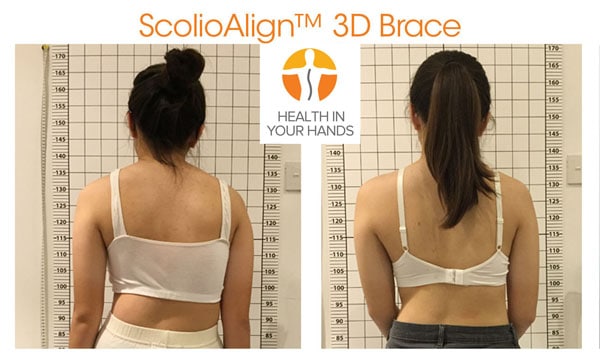
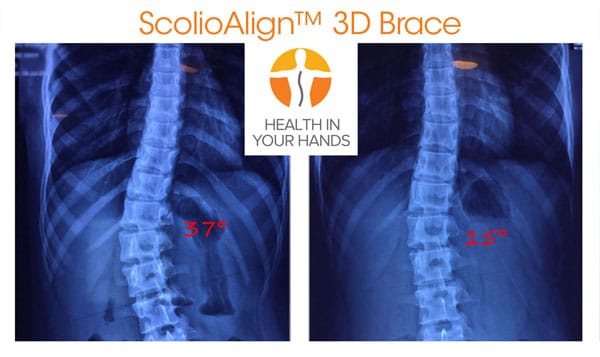
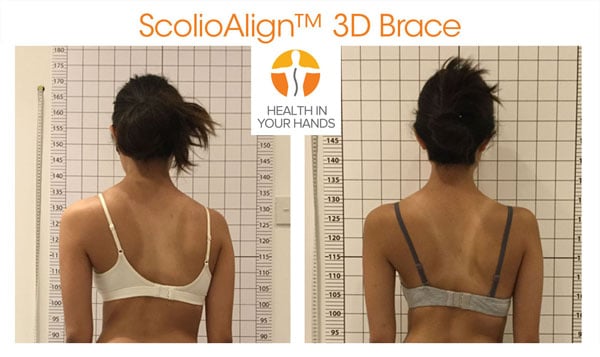
How each ScolioAlign™ 3D Brace is made
Each ScolioAlign™ 3D Brace is custom-built for one patient using CAD/CAM (Computer-Aided Design and Computer-Aided Manufacturing) technology. Dr Kevin Lau combines 3D full-body laser scanning, X-rays and posture photographs to create an accurate digital model of the spine, which is then used to design and manufacture a precision-fitting brace.
-
1. 3D body scan, X-ray and measurements — we capture a full digital and clinical picture of the curve.
-
2. CAD design & CAM fabrication — we design the brace digitally and 3D-print it to your child's exact anatomy.
-
3. Brace fitting & adjustment — we fine-tune the fit in clinic for comfort and corrective positioning.
-
4. Progress reviews & follow-ups — we track in-brace and out-of-brace measurements over time to monitor results.
Who is the ScolioAlign™ 3D Brace for?
-
Adolescents with idiopathic scoliosis — particularly those still growing, where bracing has the greatest influence on curve behaviour.
-
Families seeking a non-surgical option — parents wanting to explore curve management before considering spinal fusion surgery.
-
Adults with mild to severe curves — including curves over 40° Cobb, where the over-corrective design is intended to support alignment and comfort.
Dr Kevin Lau's commitment

Dr Kevin Lau has spent more than 20 years focused on non-surgical scoliosis management and is the author of published books on the subject. He personally oversees every stage of the ScolioAlign™ process — from the initial 3D scan to design, fitting and follow-up — and handles the customisation for each brace himself rather than ordering generic devices from overseas manufacturers. The goal is a higher standard of personalisation and clinical care for every patient. *Doctor of Chiropractic, RMIT, Australia.
Frequently Asked Questions
What is the ScolioAlign 3D Brace?
The ScolioAlign™ 3D Brace is a custom, 3D-printed over-corrective scoliosis brace designed by Dr Kevin Lau. Built from a 3D body scan and CAD/CAM design, its clinical goal is to reduce the Cobb angle and limit curve progression, rather than only holding the spine in place like a conventional rigid brace.
How is the ScolioAlign 3D Brace different from a Boston brace?
A Boston brace is a symmetric rigid brace built mainly to stop a curve from progressing by compressing the trunk. The ScolioAlign™ 3D Brace applies guided, asymmetric over-corrective force at specific points and is designed to encourage curve reduction in three dimensions. It is also lighter, 3D-scan measured, and shaped to be worn discreetly under clothing.
Can the ScolioAlign 3D Brace reduce my Cobb angle?
The clinical aim of the brace is to reduce the in-brace Cobb angle and limit long-term progression. Results depend on age, skeletal maturity, curve size and how consistently the brace is worn, and individual results vary. Dr Kevin Lau reviews each case and tracks measurable progress at follow-up appointments.
How long does it take to get a ScolioAlign 3D Brace in Singapore?
The process begins with a consultation and 3D body scan, X-ray and measurements at the ScolioLife clinic at Tong Building, 302 Orchard Road, Singapore. The brace is then designed with CAD and 3D-printed before an in-clinic fitting and adjustment. Your exact timeline is confirmed at your first appointment.
Is the ScolioAlign 3D Brace suitable for severe curves over 40 degrees?
Yes. Unlike several conventional braces designed mainly for milder curves, the ScolioAlign™ 3D Brace can be used for both mild curves up to 40° Cobb and severe curves over 40°. Suitability is assessed individually during your consultation with Dr Kevin Lau.
Stop Waiting to See If the Curve Gets Worse
If your child has just been diagnosed — or a hospital has raised spinal fusion surgery — you don't have to decide alone. Book a consultation at the ScolioLife clinic on Orchard Road, Singapore, or send your X-ray for a free review, and Dr Kevin Lau will assess your curve, explain whether the ScolioAlign™ 3D Brace is suitable, and outline the clinical goals for your case.
Speak with ScolioLife's Team
Scoliosis is most manageable when it is assessed early and accurately. Find out whether the ScolioAlign™ 3D Brace is suitable for your curve — send your X-ray for a free review or message us on WhatsApp.
✓︎ Award-winning Scoliosis Clinic
✓︎ Over 20 Years Experience